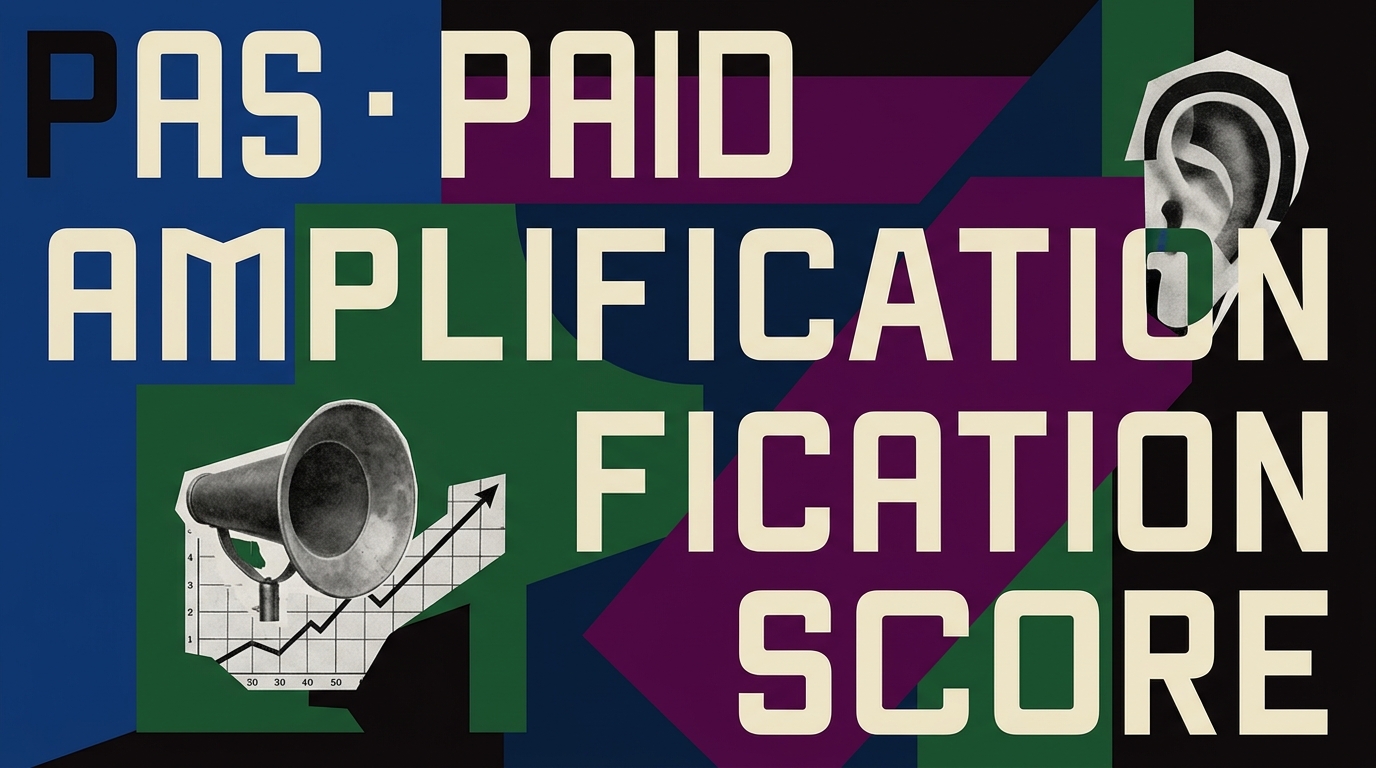
PAS · Paid Amplification Score
The Paid Amplification Score (PAS) classifies a brand's paid-ad pattern into one of four shapes: always-on, test-and-scale, burst, and minimal. The pattern matters because the same total spend produces wildly different outcomes depending on cadence; a burst pattern signals product launches while always-on signals brand-building. Sentia computes PAS from observed ad-run lengths and spend distributions in 2026 and renders it on every competitor detail page so analysts can read the strategy in one glance.
What it is
PAS is a categorical score, not a 0-100 number. It groups a brand's ad activity into four named patterns:
- Always-on: continuous spend with low variance, signals brand-building.
- Test-and-scale: small spends followed by amplification of the winners, signals an optimisation-driven team.
- Burst: concentrated spend windows around launches or seasonality.
- Minimal: low total spend, signals organic-first or budget-constrained.
Why it matters
A competitor's spend pattern reveals their playbook. A burst pattern means they treat ads as launch fuel. An always-on pattern means they treat ads as the floor under organic. Knowing which one the competitor runs reframes the whole competitive analysis.
How Sentia uses it
PAS lives in app/lib/scoring/paidScore.js and renders on the competitor detail page after the PPS section. The classification reads observed ad-run lengths and spend distributions over the trailing 90 days.
Related concepts
Keep Reading
Start with one monitor. Free.
Add a brand, paste a couple of competitor handles, and see your first calibrated readout in under five minutes.