CPM, CPC, CPE · and which one to actually care about
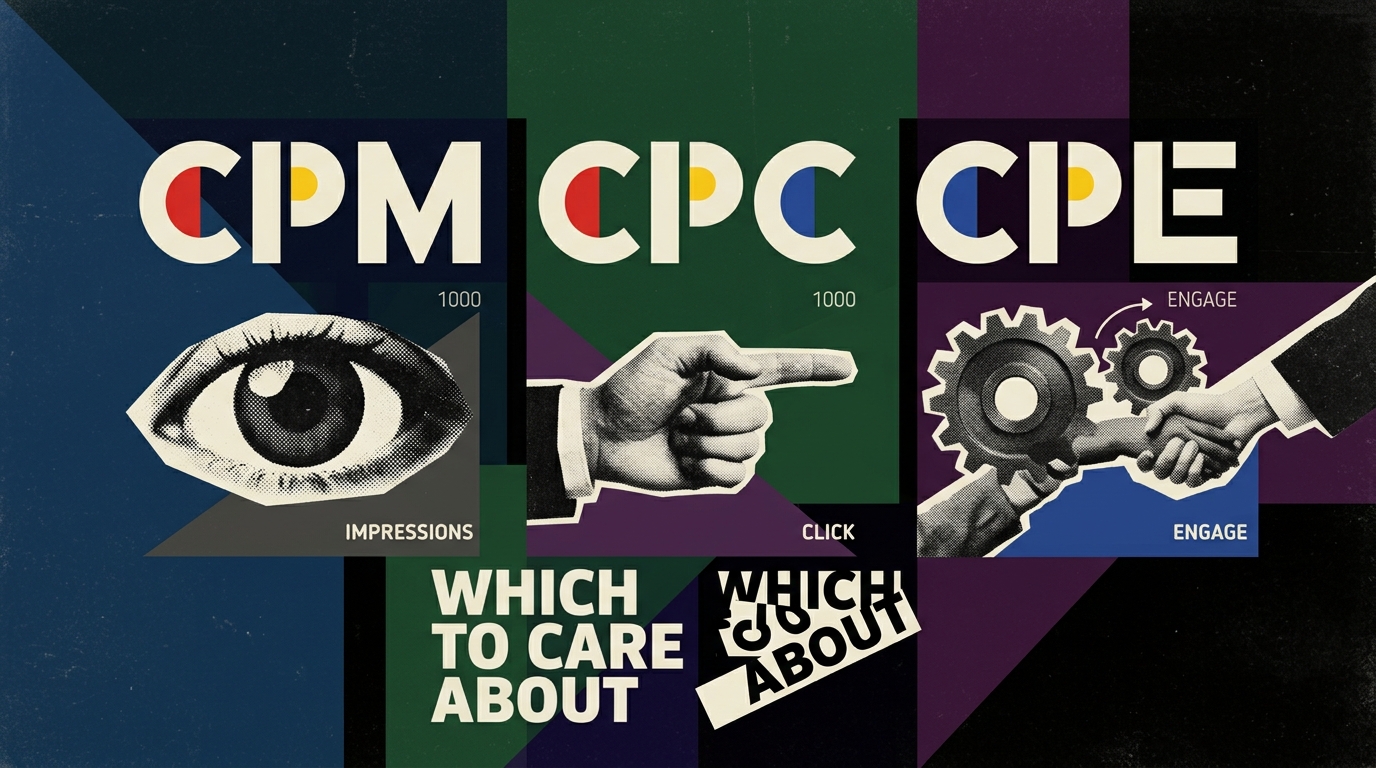
CPM is cost per thousand impressions, CPC is cost per click, and CPE is cost per engagement. CPE is the most defensible of the three for blending paid and organic performance because engagement is the one signal both surfaces produce in comparable units. In 2026, marketing teams that report blended CPE alongside calibrated EMV get cleaner conversations with finance than teams that defend CPM in isolation, because CPE survives the question "what did this actually do".
What it is
Three cost ratios that show up on every paid-media report:
- CPM · cost per mille, meaning cost per 1,000 ad impressions. The denominator is reach.
- CPC · cost per click. The denominator is a click on the creative or link.
- CPE · cost per engagement. The denominator is any meaningful interaction · likes, comments, saves, shares, video completion above a threshold.
Each ratio answers a different question. CPM answers "how cheaply did we reach the audience". CPC answers "how cheaply did we drive intent". CPE answers "how cheaply did we earn a behaviour".
Why it matters
Most teams default to CPM because that is what the ad platforms report by default. CPM is the wrong number for an organic-paid blend. Organic posts have no CPM · they cost zero to deliver · so any blended CPM is undefined or fake.
CPE survives the blend. An organic post and a paid post both produce engagements in comparable units. Divide cost by engagement on the paid side, divide an EMV-derived shadow cost by engagement on the organic side, and the two numbers sit on the same axis. CPC is the third option but only works for surfaces with link attribution, which most organic surfaces lack.
A common failure mode: a brand celebrates a low CPM on a paid push, then sees zero engagement lift. The push moved impressions but moved no behaviour. Reporting CPE alongside CPM catches this immediately.
How Sentia uses it
Sentia computes CPE on every paid surface · Meta Ads, TikTok, Google Ads · and pairs it with an organic-equivalent CPE derived from EMV. The two numbers render on the same chart so the marketing team can see whether paid spend bought engagement at parity with organic baseline, above it, or below it. We treat unblended CPM as informational, not actionable.
Boost likes are tagged separately because Meta-Ads boost moves likes but never comments · including boosted likes in CPE inflates the number without adding signal.
Related concepts
Keep Reading
Start with one monitor. Free.
Add a brand, paste a couple of competitor handles, and see your first calibrated readout in under five minutes.